
It has been impossible for me to blog about online learning over the last four weeks because I have been on holiday for most of the time, in places deliberately chosen because there were no Internet connections.
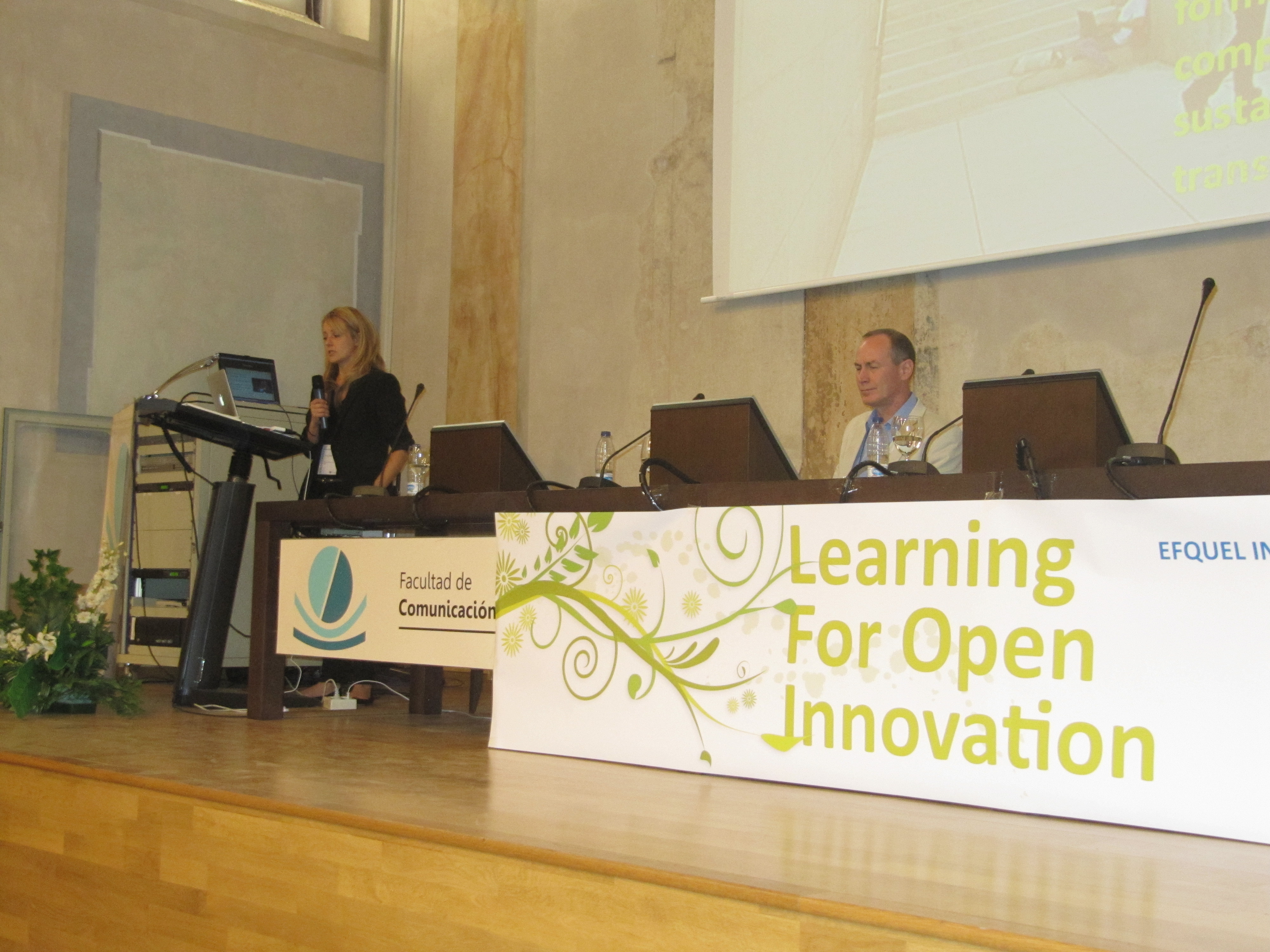
The EFQUEL Innovation Forum
However, the first week away was spent at a very interesting forum organized by the European Foundation for Quality in e-Learning (EFQUEL). The focus was in the interface between open learning and innovation in post-secondary education. There were about 120 participants from all round Europe, including Russia and Serbia, as well as the usual suspects from the UK, Spain, Finland, Germany, Italy and Belgium.
One of the goals of the conference was to enable EFQUEL to identify its priorities over the next 12 months, in a context where most European governments are grappling with austerity and the resulting financial pressures on universities. Online learning of course is being heavily promoted by governments as a means of increasing productivity through innovation, and the bulk of the participants were anxious to ensure that the issue of maintaining or increasing the quality of the educational experience through online learning received as much attention as the technology and cost issues. In particular, papers and keynotes concentrated on the relationship between open educational resources, innovation, and quality.
Somewhat to my own surprise, I found myself in my opening keynote arguing the case for sustaining innovation rather than disruptive innovation for universities, because I want the core values of universities (knowledge preservation and creation; rationality; evidence-based research) to be maintained, while improving quality and cost-effectiveness. Thus the trick is to bring about the necessary changes without destroying the very benefits that make universities so important to our society. Thus my talk was titled: ‘How to make an omellette without breaking eggs.’ In fact, some eggs will get broken, but the egg will still be there in the omelette.
I argued that for innovation to succeed in universities, it needed to be supported and to some extent managed, and I discussed several strategies for supporting innovation in teaching and learning. A copy of my slides can be downloaded from Dropbox. You will need to request this by sending me an e-mail to: tony.bates@ubc.ca. Please ask for my EFQUEL presentation.
The conference provided a pretty good overview of the European context regarding approaches to open educational resources (full copies of the paper presentations can be accessed here.) The challenge in Europe as elsewhere is to find ways to integrate and build on OERs, but the focus still tends to be too much on just making materials open without any thought of how they can best be used. However, the forum provided a good way to bring players from all across Europe together to share ideas and to promote better quality in e-learning through the use of open content and approaches.


Recent Comments
R on What’s right and what’s wrong about Coursera-style MOOCs
What a bunch of cry babies. Hello free education, material, quizzes peer grading. Its not easy to personalize. You must...worried wart on What’s going on at Athabasca University?
I am a bit worried as a distance student in Toronto. I am completing courses towards the CMA designation. I...formación online on Una mirada personal sobre el uso de tecnologías digitales en la formación de docentes en los INFDs de Argentina.
Muy interesante gracias por compartirlo.Tony Bates on Discussing design models for hybrid/blended learning and the impact on the campus
Very nice story, Howard. Yes, I guess that sums up my law of equal substitution - it all depends on the...Howard Davis on Discussing design models for hybrid/blended learning and the impact on the campus
Hi Tony, not to muddle your observation about "high/low" emotional meetings since I agree with it, but I have direct...Tony Bates on Discussing design models for hybrid/blended learning and the impact on the campus
Good comments, Denise. I agree: I think 'non-academic' or non-content issues, such as availability of support, cost, student needs, and methods...Tony Bates on Discussing design models for hybrid/blended learning and the impact on the campus
Thanks for this comment, Howard. Your 'flipped' question is an interesting one. I think at an exploratory stage, for brainstorming, etc.,...Math Calculus on e-learning outlook for 2012: will it be a rough ride?
I think it will not be tough as long as the educators are going to do their best