May 21, 2013

Book review: OERs and Change in Higher Education: Reflections from Practice

Listen with webReader

Glennie, J. et al. (2012) Perspectives on Open and Distance Learning: OERs and Change in Higher Education: Reflections from Practice Vancouver BC/Paris: Commonwealth of Learning/UNESCO. The book is available for free downloading.

From the publisher’s web site:

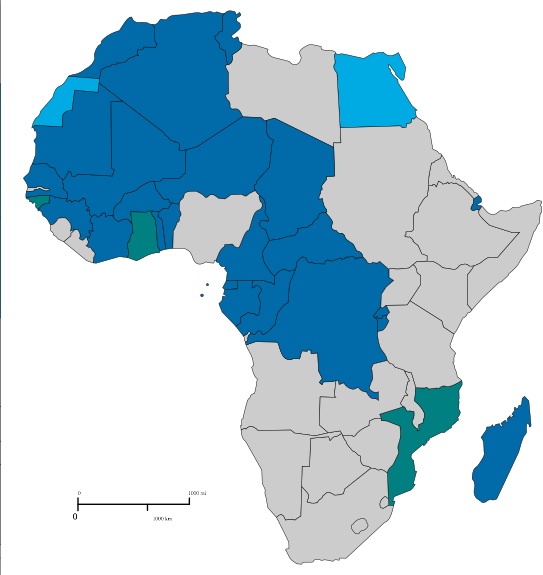
Although OER activities are taking place globally, most large and well funded projects have been in North America and Europe. As a result, little is known about important questions such as how the more acute levels of resource constraint typical of developing countries impact on demand for OER and on their reuse. The case studies and reflections in this book cover OER practice and policy in a diverse range of contexts, with a strong focus on events in developing countries. However, the focus on experiences from the developing world is not exclusive, as valuable “generic lessons” applicable also to developing countries can be drawn from research in the more developed countries.

Review of the book

Hammer, S. (2013) Review of Perspectives on Open and Distance Learning: OERs and Change in Higher Education: Reflections from Practice British Journal of Educational Technology, Vol.44, no. 2

At the end of her review, Dr. Hammer states:

A key strength of this book is the breadth of coverage of issues that are relevant to OER combined with the particular challenges and opportunities that their use presents to poorer developing nations. I would recommend it to any educator interested in finding out more about this amazing movement and even starting to put these ideas into practice


Où sont les spécialistes francophones des OERs/REO?

Listen with webReader

Veuillez pardonner que j’écrisse le pauvre français – l’anglais suivit.

UNESCO et le Commonwealth of Learning organisent un Forum Politique Africain au sujet des ressources éducatives ouvertes (OER/REO) à Pretoria, Afrique du Sud, du 21 -22 fevrier, avant du Congress Mondial des OER/REO en juin à Paris.

UNESCO et le Commonwealth of Learning cherchent les spécialistes francophones des OER/REO (les ressources éducatives ouvertes) et les délégués de gouvernement.

On veut trouver beaucoup des spécialistes francophones des OER/REO et des délégués de gouvernement, qui ont dévélopés les avant-projets ou ont réalisés les politiques, ou ont demonstrés les grands engagements au milieu des REO.

Avec l’assistance de la fondation Hewlett (les Etats-Unies),il est possible que le Commonwealth of Learning puisse trouver les fonds de soutenir les participantes francophones qui veulent assister au Forum.

On peut trouver les détails plus amples d’Abel Caine, Programme Specialist for Open Educational Resources at UNESCO.

Search for Francophone African OER Experts and Government representatives 

UNESCO and the Commonwealth of Learning are organizing an Africa OER Policy Forum in Pretoria, South Africa from 21 -22 February in the lead up to the World OER Congress.

Help is sought in identifying a good number of Francophone OER experts/ practitioners as well as Francophone government representatives that have developed drafts or actually enacted policies, or have shown great commitment to enacting OER policies.

Through the generous support of the Hewlett Foundation (USA), the Commonwealth of Learning may be able to provide funding for selected Francophone experts/ government representatives to attend the Forum.

For further information, please contact Abel Caine, Programme Specialist for Open Educational Resources at UNESCO.

First World OER conference to be held in Paris

Listen with webReader

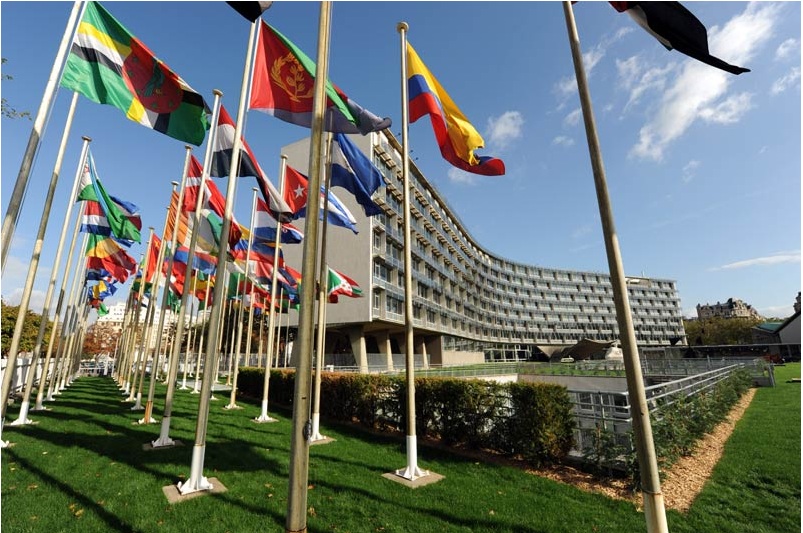
UNESCO, Paris

What: 

UNESCO proposes to organize a World OER Congress to:

  1. Showcase the world’s best practices in OER policies, initiatives, and experts; and
  2. Release a 2012 Paris OER Declaration calling on Governments to support the development and use of OERs
  3. Celebrate the 10th anniversary of the 2002 UNESCO Forum that created the term OER

Where:

Room II, UNESCO HQ, Paris, France

When: 

Wednesday 20 – Friday 22 June, 2012

By Whom:

UNESCO, in collaboration with the Commonwealth of Learning, with funding support from the Hewlett Foundation

For whom:

The Congress will bring together Ministers of Education/Human Resource Development, senior policy makers, expert practitioners, researchers and relevant stakeholders to discuss what works and what won’t work, and to agree on a Declaration with a set of targets for a 2015 World Conference.

More details:

Click here

Online learning in the Garden of Eden

Listen with webReader

Titian's the Fall of Man: but who's the snake? Online learning?

Daniel, J. (2011)  20 Years of Distance Education in the Garden of EDEN: Good News and Bad News EDEN 20th Anniversary Conference: Learning and Sustainability: The New Ecosystem of Innovation and Knowledge, Dublin, 20 June

This keynote raises some interesting issues about distance education and online learning in particular. After congratulating EDEN, quite rightly, on creating an organization that bridges Eastern and Western Europe, John Daniel, the President of the Commonwealth of Learning, launches into a critique of the conservatism of the higher education system, in particular for not fully exploiting the potential of technology to reduce the costs or improve the effectiveness of learning. He argues a point he has made previously that higher education risks splitting into two camps: research universities that are publicly funded and teaching universities that are for-profit institutions, with the latter fully exploiting technology.

More interestingly, he launches into a criticism of more recent opposition to online learning and distance education at a governmental level. In particular he singles out Ethiopia, India and the United States for introducing government regulations that unduly restrict the potential for open and distance learning. He argues that because of some bad apples, some governments are throwing out the whole barrel. His response:

  • open and distance learning are essential if countries are to rapidly expand opportunities for learning; expanding the existing system (four new universities every week to meet the identified demand) is just not going to cut it
  • self-directed learning is an essential 21st century skill and open and distance learning strongly facilitate this
  • ODL is an effective mechanism for integrating ICTs into higher learning. Governments need to be reminded that ODL institutions have the muscle to innovate cost-effectively at scale
  • maintain strong and independent quality assurance agencies that have all higher education under their purview, public and private, classroom and distance. What matters is the quality of the output of higher education, not how it was offered or under what corporate structure.

Comment

It’s hard to argue against any of these points. However, the challenge still remains to demonstrate clearly that technology indeed can break the triangle of cost, quality and access. We will not get better quality and increased access with the same or less cost unless we radically change the dominant paradigm of classroom-based teaching so that the full potential of technology can be exploited. Specialized distance education institutions is one possible model, but we need other models as well that still remain to be invented.

Nevertheless it is refreshing to see a leader of an international, inter-governmental organization so strongly challenging in public mistaken policies at a governmental level.


Is for-profit online learning the answer for developing countries?

Listen with webReader

Computer lab, Tshwane University of Technology, South Africa

Daniel. J. (2011) The Role of For-Profit Higher Education Commonwealth of Learning, April 7

Sir John Daniel, the President of the Commonwealth of Learning, reports on a meeting on Exploring the Future of International For-Profit Higher Education and Quality Assurance organized by UNESCO and the US Council for Higher Education Accreditation (CHEA).

John Daniel comments:

Many developing countries will not be able to respond to the burgeoning demand for higher education without recourse to the private sector, so the question is not whether to recognise private institutions but how to position them in higher education systems in ways that optimise their contribution to the public good…..

The discussion showed that the for-profit sector can deliver education in the public interest. Accreditation and quality assurance are important services to the public and are helping to make governments more comfortable with a variety of business models in higher education. It is important to pursue the dialogue about for-profit education within the academy as well as with governments. This will help to build bridges and increase trust.

I agree that for developing countries, both private and public systems have important roles to play in enabling the development of learning and education. Nevertheless I would add two important caveats.

First, the primary goal should be to develop a high quality public education system that is open to all, irrespective of income, race or caste. Private education may be a useful intermediary step for those able to afford it until the state can provide universal good quality education, but by definition private education cannot provide for all potential learners, and if it becomes too strong it can undermine a state system.

Second, US-based for-profit organizations continue to struggle exporting their model to other countries. This is not because they are for-profit (or US-based), but because education has strong cultural and local roots and hence is difficult (but not impossible) to transfer successfully between countries.

Education needs to be adapted to the local needs of developing countries if it is to succeed. This usually means locally produced content, and the development of a professionally strong local teaching force. International collaboration and partnership may provide valuable assistance to this process, but the development of a strong, autonomous indigenous educational system should be the ultimate goal, not the marketing of Western-based teaching content (whether open source or commercial).

Lastly, the advertisement below from the HSBC Bank serves a welcome reminder that the internationalization of education is not just one way. Indian instructors are playing an important role in educating US students: