May 24, 2013

No. 3 aha moment: asynchronous is (generally) better than synchronous teaching

Listen with webReader

The transmitter at Alexandra Palace, London, for the OU's TV and radio programs

In an earlier post, I listed the seven ‘aha’ moments that have been the most seminal ‘discoveries’ in my researching and working in educational technology. This is the third of seven posts that discuss why I believe these ‘discoveries’ to be important, and their implications specifically for online learning. The others to date are:

1.  Media are different.

2. God helps those who help themselves (about educational technology in developing countries).

What was the discovery? (1978)

Everyone learns better from media and technologies that allow them to study anywhere, at any time. In particular the ability to repeat and revise recorded material makes learning much more effective than live, synchronous teaching, for any learner who requires flexibility in accessing educational opportunities.

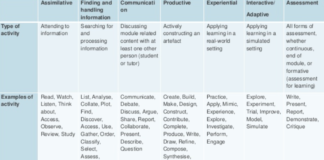
Which are synchronous and which are asynchronous technologies?

From Bates, A. (in press) Technology, e-Learning and the Knowledge Society, London: Routledge

From the table above, it can be seen that synchronous technologies include both one-way (broadcast) technologies, such as lectures, radio, broadcast television, and Webcasts, and two-way (interactive) technologies such as face-to-face seminars, audio-conferencing, video-conferencing, web conferencing, and virtual worlds. The unifying feature of synchronous technologies is that they take place in real time; thus both teachers and students have to be communicating together at the same time (but not necessarily in the same place.)

Asynchronous technologies include both one-way (broadcast) technologies such as print, audio-cassettes, podcasts, video-cassettes, lecture capture, web sites, DVDs, databases, web streaming including YouTube videos, and xMOOCs, and two-way (interactive) technologies such as written assignments, e-mail, online discussion forums, learning management systems, e-portfolios, blogs, search engines,cMOOCs, and other social media such as Facebook. Synchronous ‘content’ can be made available ‘asynchronously’ through recording.

How did this discovery come about?

To be honest, this insight really came from work by my colleagues at the Open University, Hans Grundin, Duncan Brown, Nicola Durbridge and Stephen Brown. As part of the Audio-Visual Media Research Group, we were tracking student participation in the television and radio broadcasts that accompanied the Open University courses. The latest technology in the early 1970s was the battery-operated radio cassette player (the Sony Walkman did not arrive until 1979). This allowed students to set a timer which would automatically record a radio program on to an audio cassette. The research indicated that increasingly students were recording the radio programs to listen to them later, but more importantly they were rating the cassettes as significantly more useful to their studies than the radio transmission.

There were many reasons for this:

  1. The OU radio programs were often transmitted at difficult times, such as 6.00 am or midnight.
  2. Students could stop, rewind and replay the cassettes.
  3. We found that students were working on the print materials on average roughly a week to ten days behind the recommended schedule. Thus the recorded version was more in synch with their actual study pattern than the broadcast.

As a result the university started up an audio-cassette library service, whereby students could order a cassette if they missed a program and have it mailed to them. Also the university started designing audio-cassettes that were not broadcast but accompanied the printed material that was the core of the studies. Instructors began taking advantage of the ‘affordances’ of the cassette technology, in several ways:

  1. Integrating the cassette very tightly with the printed material. For instance, John Mason, a mathematics instructor, used the audio cassette to talk students through equations and mathematical formulae in the printed text, very similar to the way Salman Khan talks student through a video version in the Khan Academy – but 40 years earlier
  2. Making use of the stop-start cassette facility to build in exercises and activities for students to do, with the feedback/answers later on the cassette tape. (Because you have to search ‘blind’ through an audio-cassette, it prevents students jumping straight to the answer.) For a full list of the ‘affordances’ of audio that were identified through the research of the AVMRG, see: Pedagogical roles for audio in online learning

In the end, the audio cassettes became so popular that by 1980 the BBC/OU almost entirely stopped broadcasting radio programs directly linked to course units .

When the video-cassette recorder arrived in the late 1970s, we found exactly the same pattern. The cassettes were rated more highly than the television broadcasts, and at one time the university was operating a system whereby more than 200,000 audio and video cassettes a year were being shipped out to students.

Why is this significant?

Because it suggests that asynchronous online learning is almost always better for learners requiring flexible learning than classroom teaching or ‘live’ broadcasts. In particular, despite the different ‘affordances’ of different media, there are some common advantages across all asynchronous technologies. In particular, students have greater control over asynchronous technologies, enabling them to fit their learning more easily into the rest of their lives, and also to repeat, and practice, until they can achieve mastery.

However,  there are circumstances where there are advantages in synchronous teaching. One obvious example is teaching oral language skills. Real-time communication in a foreign language is an important competency, so while recordings can help, students will need to practice in real time. There are circumstances where a live lecture or classroom can be more effective, for instance when trying to build a sense of community with a class, to provide an overview or summary of a whole course, or to provide inspiration or motivation to students.

Furthermore, as with all media, there are other variables which may have a large influence on effectiveness. For instance, a well-managed face-to-face seminar is likely to result in greater learning than a poorly managed online discussion forum; quality matters. Students looking for a campus-experience and direct social contact with other students are more likely to benefit from synchronous communication opportunities such as lectures and seminars.

But I woud argue that over a very broad range of circumstances, learners will on balance benefit more from asynchronous technologies, because of the extent to which they can control the pace and place of learning, and this is of particular significance for distance and/or lifelong learners.

Comments

This is probably one of the most controversial of my aha moments. There are many instructors for instance who believe very strongly in the advantages of real-time teaching, such as a lecture or seminar. Others swear by webinars (which can of course also be recorded).

Thus your comments on this will be particularly appreciated, particularly if you have research evidence to support your views.

References

There are 300 research reports from the AVMRG at the Open University. They are now difficult to access, but the Open University library has a complete set of papers, from 1 to 300, preserved within the University Archive. They are catalogued in the main Library catalogue http://voyager.open.ac.uk/index.html where they can be found by searching for a related topic or by searching for “AVMRG”. Visitors to the Library are welcome to access the reports within the University Archive.

Much of the research is summarized in the following books:

Bates, A. (1986) Broadcasting in Education: An Evaluation London: Constables

Bates, A. (2005) Open learning, e-Learning and Distance Education London/New York: Routledge.


European open universities feeling the stress of austerity

Listen with webReader

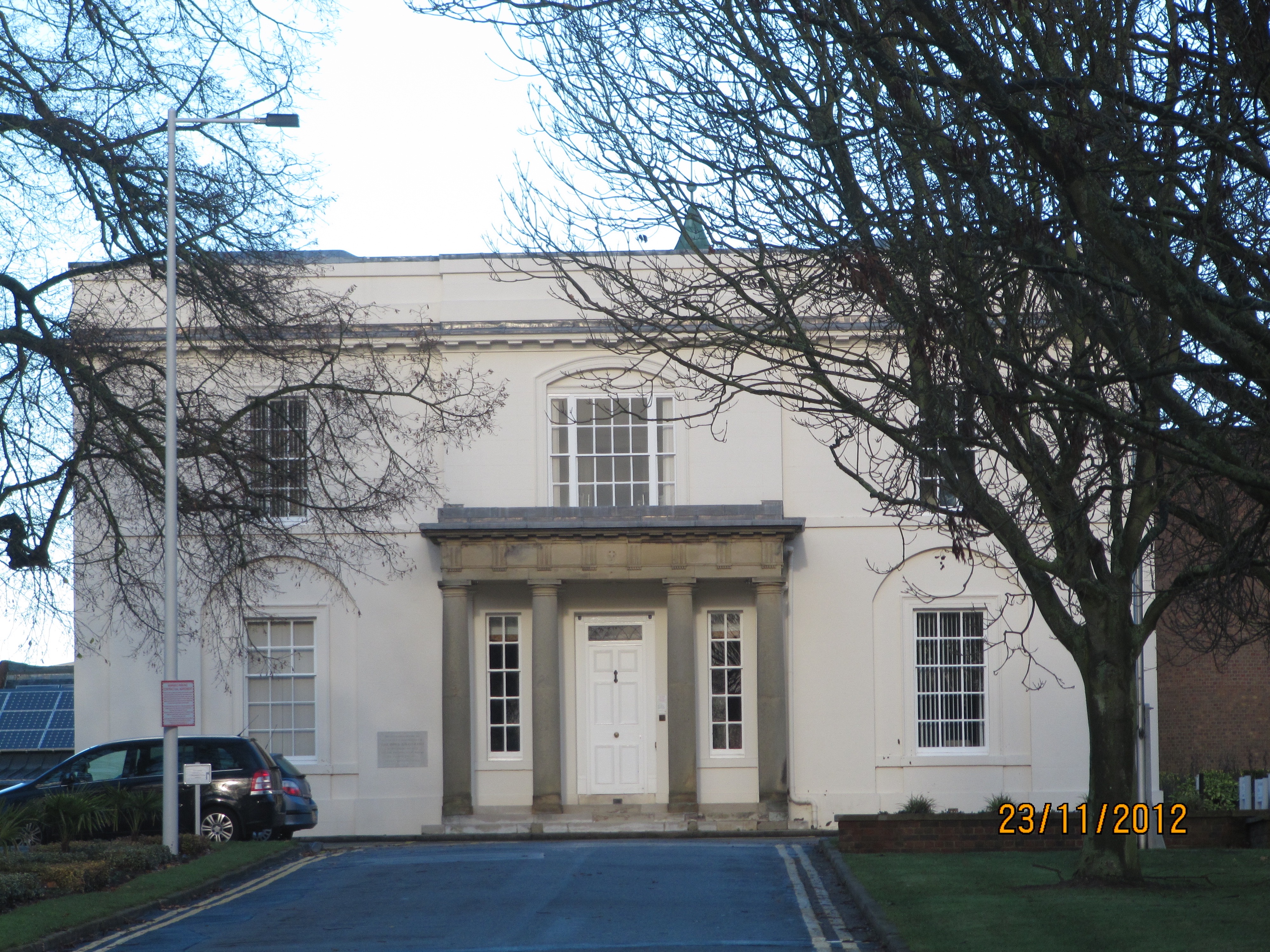
Walton Hall, which houses the office of the Vice-Chancellor, the UK Open University

A trip down Memory Lane

I’ve just returned from a very interesting week in Europe, accompanied by my colleague, Maxim Jean-Louis, the President of Contact North. My philosophy in life is never look back. So my visit to the Open University in England was the first time I had been there in 23 years, since I emigrated to Canada. Similarly, I had worked at the Open University of Catalonia (Universitat Oberta de Catalunya – or UOC) as a part-time research professor between 2003-2007, and again I hadn’t been back for five years. The third place I visited was the London Knowledge Lab at the Institute of Education, University of London, where I was a post-graduate student so long ago that I typed my thesis on an IBM golf-ball typewriter (which is about all I can remember of the experience).

First, amazingly, there were still very good friends and colleagues working at all these institutions, and I was somewhat discombobulated by the very warm welcome I received from them. MOOCs may come and go, but good friends are for life. Second, the dynamism that made all these places fun to work at is still there.

Why I was there

I will be writing detailed reports on each of these visits, but the purpose of my visit from my perspective was to look at the research being done on online learning in these three institutions, and there was great work being done in each place. Maxim’s interest was to identify the real ‘game-changers’ in online learning. More to come on this in later posts.

Money is the root of all evil

However, transcending both purposes is the current financial context in both the UK and Spain. These countries are undergoing profound economic stress and the two open universities are not able to avoid the consequences, although the challenges differ according to the context.

In particular, the UK Open University, which has been and continues to be immensely successful, with over 180,000 credit students, is suffering the law of unintended consequences. The UK government, in its wisdom, has completely changed the system of post-secondary funding. In effect, it has stopped giving universities funding to support teaching. Instead, universities now have to depend entirely on student tuition fees at around $15,000 per student per year. To cover the costs, students can take out low interest loans which are underwritten by the government. However, to qualify for such loans, students must take a full time ‘load’ of courses.

This financial strategy strikes at the very heart of the Open University. It has been forced to move from essentially a ‘free’ university to one where students are now paying around $7,500 a year in tuition fees, which is still less than half the going rate at most other universities in England and Wales. However, most of its students are working adults, and are not taking a full load of courses. Indeed, many of them are somewhat like MOOC students, taking individual courses or unique combination of courses that fit their particular needs as adults. These however do not lead to the ‘recognized qualifications’ that makes them eligible for a student loan. Thus the change in financing is devastating for many low-income learners wanting to study through the Open University, as well as for the university. As its Vice-Chancellor stated to us, if you want to look at a successful model for financing higher education, don’t look at Britain. Maybe Canada’s Mark Carney, the new Governor of the Bank of England, can help!

Meeting the challenge

Not surprisingly, the OU is looking at a range of strategies, including a strong move to internationalizing its offerings, to ensure its survival, and indeed it has seen a change in its student demographics, with younger students who under previous conditions would be applying to conventional institutions instead opting for the lower cost but still high quality and more flexible programs offered by the Open University. So you win some and you lose some. Nevertheless, I sincerely hope that the current UK government’s financial strategy for higher education is a temporary aberration – isn’t that what elections are for in a democracy?

Watch this space

The next posts on these institutions will focus on the positive, the very interesting work they are doing in research in online learning.

A brief history of online learning

Listen with webReader

© Online Colleges, 2012

Lepi, K. (2012) Who actually started online education? Edudemic, November 12

No – it wasn’t Sebastian Thrun or Daphne Koller or any of the other MOOC aficionados.

This very brief history posted by Katie Lepi has a decidedly Canadian bias, but is still pretty informative, all the same. In fact it goes back as far as 1959 with the design of PLATO.

I was pleased to see it referred to CYCLOPS, a teleconferencing system I helped to pilot at the UK Open University in 1976.

Given the Canadian slant, I thought it might have referred to CoSy, an online computer-mediated communication system developed by the University of Guelph, and used by the Open University for its first course using online learning, DT 200, with over 1,300 students, in 1988.

I was a faculty member who designed and taught the block of four week’s work on information technology in education and training on DT200. As part of the assessment students had to write an evaluation of computer-mediated communication. My wife was a student taking this course, so her informal feedback (mainly in the form of curses and slammed books) helped shaped my views as well! Conversations went something like this: ‘How do you set the dip switches on the printer?’. ‘Sorry, I can’t help you with that – it’s part of your assessment.’ ‘I don’t want to be assessed – I just want to get the !@x%$ thing to work!’  (If you are old enough to remember dip switches, you’ll appreciate her difficulties.) I’m glad that her ‘anonymous’ assessments were marked by someone else in the team.

Being pioneers is fun, looking back, but it doesn’t always seem that way at the time.

See also: Stephen Downes overview of e-learning and a little history lesson

Which university is No. 1 on iTunes U?

Listen with webReader

According to the BBC (and they can’t be wrong, can they?) it’s the U.K. Open University, with 40 million downloads so far:

Coughlan, S. (2012) Open University’s record iTunes U downloads, BBC News, October 3

Of course, it’s not quite as simple as that. The BBC thinks Stanford University and the OU must be running pretty close in terms of total downloads, but the OU is the clear winner in terms of the number of ‘hits’ it has running at one time. Here are the figures for today from the top 100 iTunesU individual downloads:

49 OU
12 Stanford
8 Commonsense media
6 TED
5 Harrisburg Area CC
4 Yale
4 MIT

The remaining places were shared between 12 institutions (including Harvard and Duke) at one place each. The top two downloads today are both TED presentations (‘Understanding Happiness’ and ‘Creative Problem Solving’). The OU has eight in the top 20, with Stanford next with 4. The ranking is based on total downloads over time. And good for Harrisburg Area CC, a community college in central Pennsylvania, for breaking into an elite list with five offerings.

Incidentally, if (like me) you were wondering about Commonsense Media, it is a ‘non-partisan, not-for-profit organization dedicated to improving the lives of kids and families by providing the trustworthy information, education, and independent voice they need to thrive in a world of media and technology‘ based in San Francisco.

Altogether Apple estimates that there are 300 million downloads a year from iTunes U, with 350,000 lectures offered by more than 1,000 universities around the world. However, and I believe this to be significant, the OU material is deliberately designed for online learning, and rarely consists of a video recording of a lecture. This might explain why there are only 4 MIT downloads in the top 100.

I wish though that Apple would provide more statistics, such as how many downloads are videos, how many are podcasts and how many are in some kind of text format. They could also make it much clearer what the formats are and what the symbols mean beside each item.

There is in fact huge scope for Apple to make iTunesU a much more user friendly and a richer system for higher education – but then, it is a ‘free’ service after all, so one shouldn’t look a gift horse in the mouth. But what about a partnership say, where the ‘big’ educational institutions set up a foundation to build on what Apple has done?

Now the $64,000 question: how many of you have actually used a download from iTunesU in an online course (either as student or instructor) – and how did it go? And if no-one replies, how do I interpret that?!


Blackboard Collaborate 11: a step forward in synchronous learning (or plus ça change….)

Listen with webReader
Audio-graphics, 1983

I first got involved in audio-graphics in 1980 (yes, that’s right, 31 years ago – I’m very old, and so is audio-conferencing). Paul Bacsich and colleagues at the U.K. Open University had developed an audio-graphics package (with a stylus and pad) that worked over telephone lines with a specially designed computer. It was called CYCLOPS. We got a $100,000 grant from British Telecom and piloted it on the UK’s regional network, delivering through the Open University’s local learning centres, to enable tutors to provide back-up to the printed correspondence materials.  Cyclops was also used to teach French and for helping children with learning disabilities.It worked pretty good (Media in Education and Development, 1983). Unfortunately, the university in its wisdom decided not to patent it or find a commercial partner, so the experiment died. (Sigh – I could have my yacht parked next to Paul Allen’s).

Fast forward to 2011, and many of the features we had in CYCLOPS can now be found in the new Blackboard Collaborate 11, including a stylus and whiteboard that can be shared between participants. Collaborate 11 is partly the result of merging Wimba and Elluminate, both of which were bought recently by Blackboard.

I have to say that Blackboard Collaborate is a big advance on Adobe Connect in terms of the range of tools available (and the big advantage over CYCLOPS is that it is full colour and works on any computer). Collaborate has the following features:

  • full desk-top sharing, application sharing, and web sharing for all participants.
  • everything is recordable and can be archived.
  • it allows up to six simultaneous audio participants for more natural discussion.
  • it can operate in six languages (Arabic, Chinese, French, Polish, Brazilian Portuguese, and Spanish) with automatic translation (presumably it will also handle English).

This allows end users or students to fully participate, create and share materials in real time, making the learning experience much more closely resemble a normal classroom.

And that is my criticism of all synchronous technologies: they attempt to replicate but not to improve on the classroom experience. Although Collaborate gets rid of the fixed place limitation of a classroom, you still have to be there at a fixed time if you wish to participate actively as a learner. Although the technology itself is much better, the teaching remains almost the same as it was in 1983. Furthermore, it will need some time and training to master all the features to get that sense of presence of a good classroom, even with the new and improved Collaborate.

Nevertheless, if synchronous teaching is your bag, this is definitely a big step forward. Unfortunately I was unable to find any pricing information.

If anyone has used Blackboard Collaborate 11 or has information on the pricing, please let me know – it was the cost of telephone lines in the CYCLOPS project that made the Open University withdraw from the experiment.

Reference

Media in Education and Development (1983),  Vol. 16, No.2

Audio-graphics 2011